In my job, I am in charge of the science and social studies curriculum for the Weston Public Schools. The state puts out a series of curriculum “frameworks” that describes what students should be learning in particular grades. In both the science and social studies framework, there are also “practices”, which are the skills that scientists and historians do in the real world.
Three practices in social studies – “Analyze the purpose and point of view of each source; distinguish opinion from fact.”; “Evaluate the credibility, accuracy, and relevance of each source.”; and “Argue or explain conclusions, using valid reasoning and evidence.” will all have particular relevance in this little story.
Over the past 7 years, thanks to one politician who I won’t name, the term “fake news” came into fashion. While this term really became more prevalent during someone’s term, I found evidence on a warm June day, that in 1889, fake news came in the form of a stone tower.
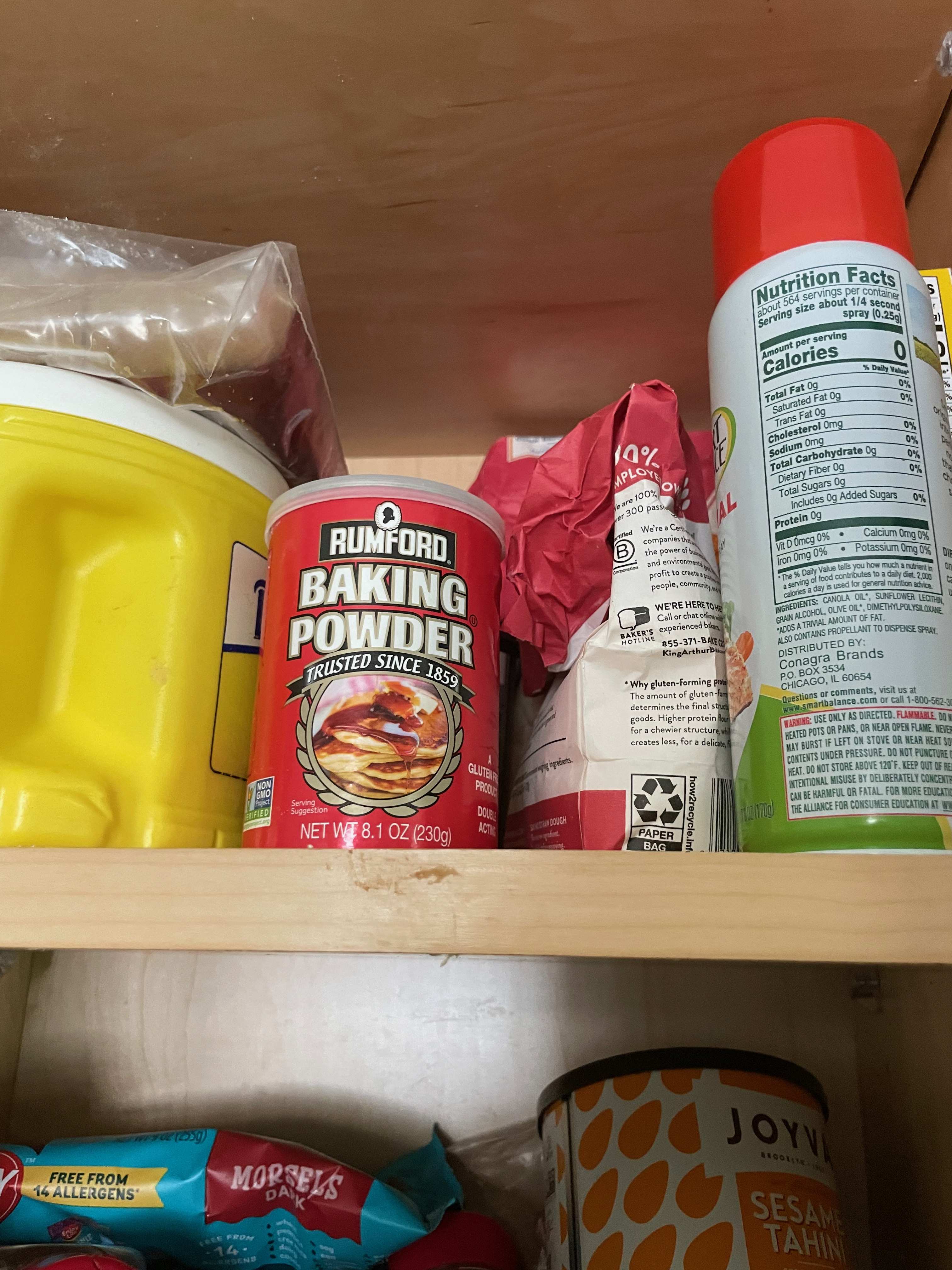
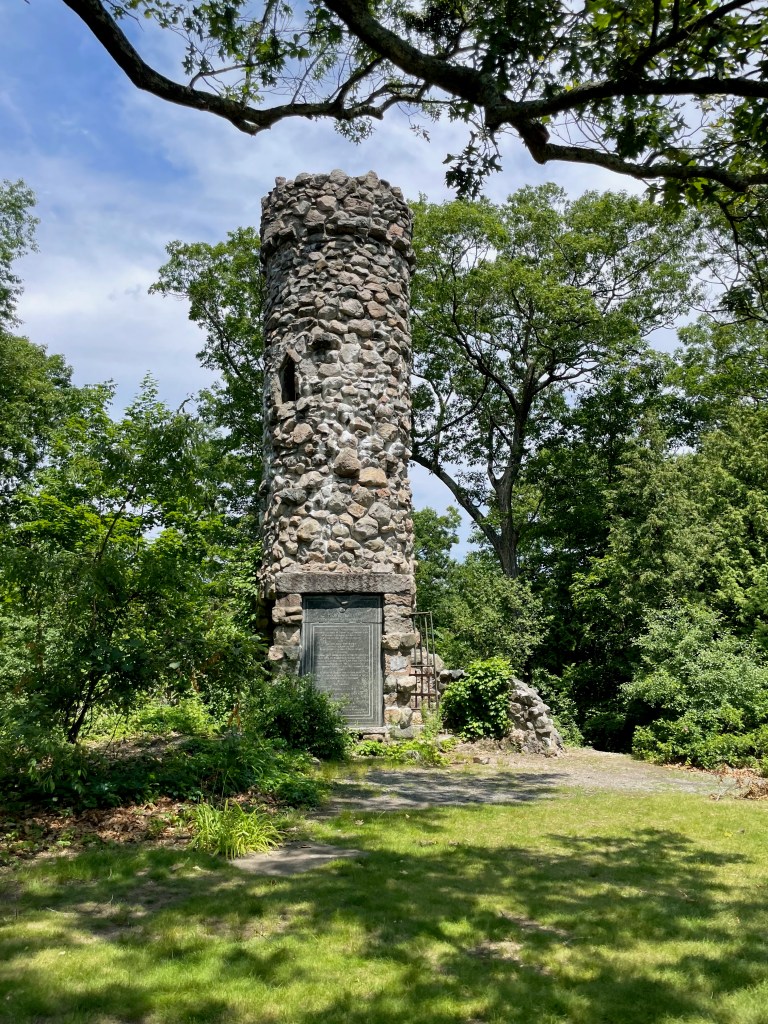
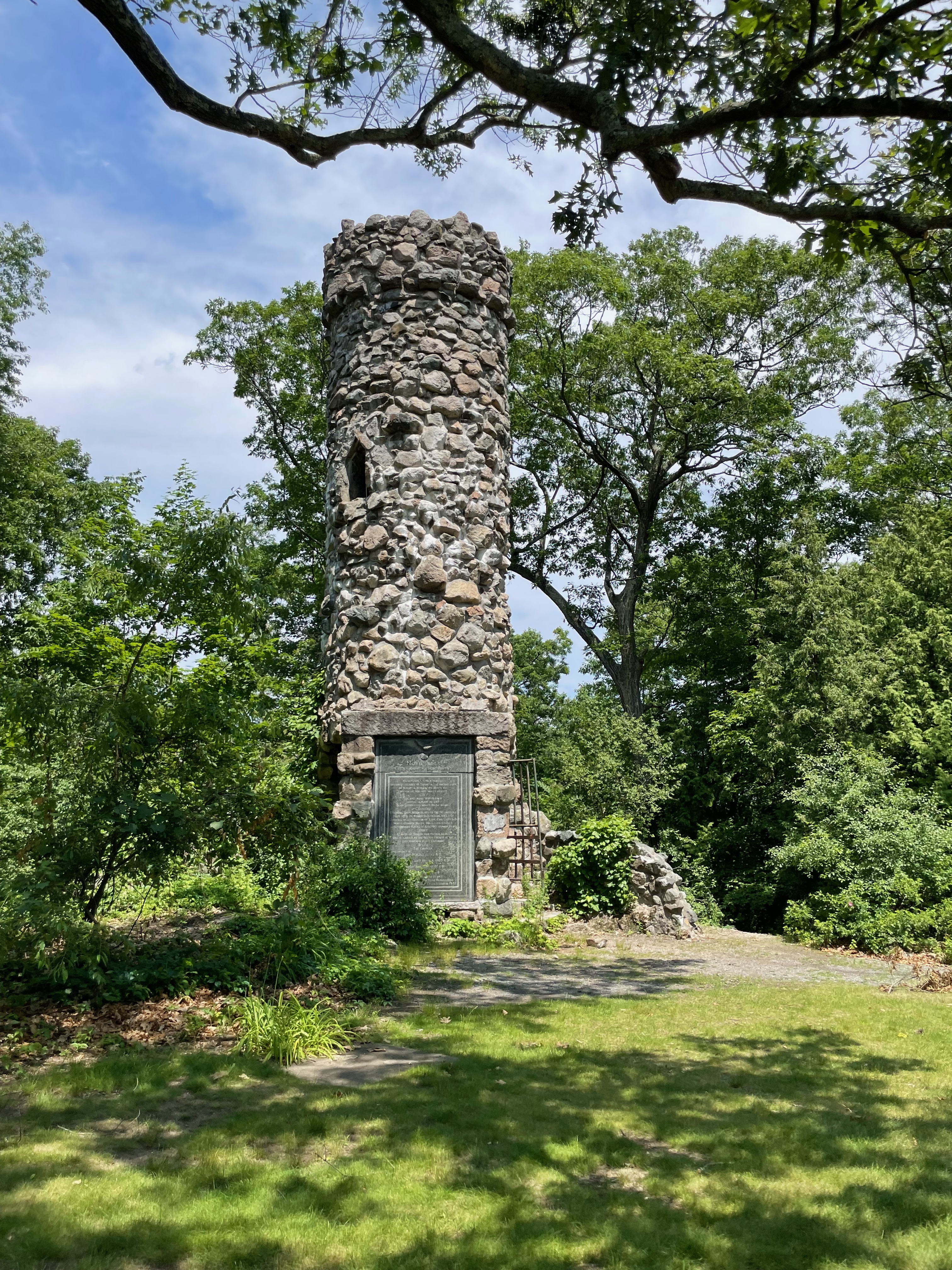
Did you know “Norumbega” was rumored to be a Viking community right here in New England? I had never heard of that before the Local History librarian in Weston gave me a copy of a newsletter written by the Weston Historical Society about 50 years ago about monuments in Weston. (http://westonhistory.org/data/uploads/bulletins/1970s/1977-05.pdf) There were lots of stone memorial “tablets” dedicated to those who fought in a lot of different wars. But what caught my eye was this stone tower called “Norseman’s Tower at Norumbega”. I asked Madeleine what the heck that was and she had boxes of writing from one Eben Norton Horsford, an amateur archaeologist who was convinced that the Vikings had a settlement right here on the banks near the Stony Brook Basin and the Charles River. His “digs” revealed no hard evidence of this being true, but he was still convinced that Leif Erikson (no relationship to this author!) lived in Cambridge, that the actual city of Norumbega was in Watertown and on this quiet little spot right off of what is now River Road, was where a fort was located to protect the city of Norumbega. Horsford had other claims to fame. He was a chemistry professor at Harvard, was the founder and president of Rumford Chemical in Rhode Island. However, in probably most people’s kitchen cabinets today, you will find his real crowning accomplishment, the creation of modern baking powder, yes indeed, that red can of baking powder with the Rumford label is indeed created by our tower building Horsford (https://thereader.mitpress.mit.edu/colorful-history-of-baking-powder-and-its-unlikely-inventor/). So, Horsford was obviously a gentleman of means and with those additional funds, he went about creating more monuments to commemorate those Vikings in Massachusetts. You can find a stone marker in Cambridge near Mount Auburn Hospital, a large bronze statue of Leif Erikson on Commonwealth Avenue in Boston and finally, our almost 40 foot tall stone monument in Weston. This was a story that I thought would be a great part of our Grade 3 curriculum and I was excited to talk to the teachers about this and explore the site.
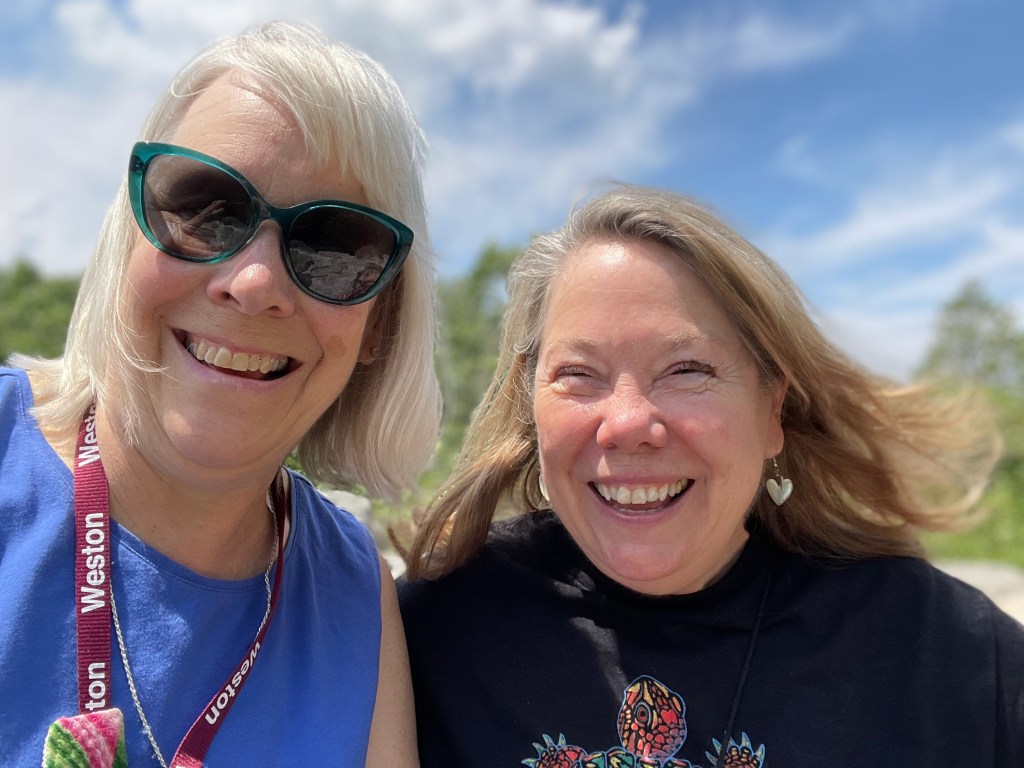
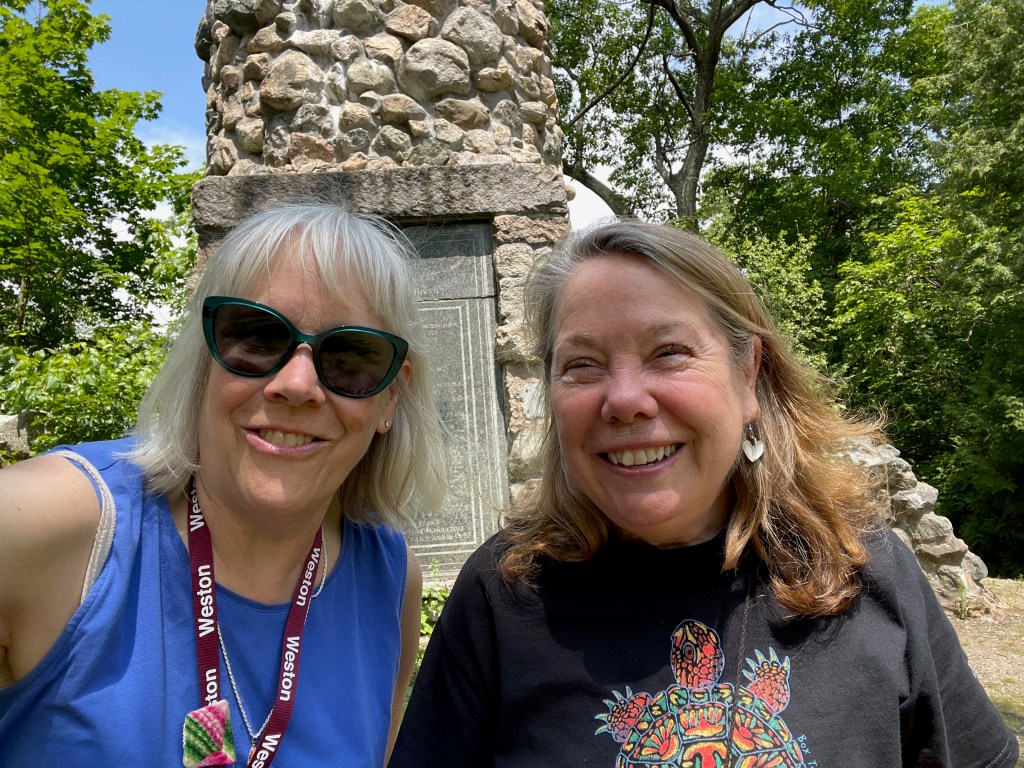
However, this school year was crazy for more than one reason. I never got to talk to the Grade 3 teachers. And I really wanted to see the site, but was a little unclear of where it was located and if it was in the middle of nowhere. It was now the last week of June and I still had not managed to learn more about this area. So, I reached out to Colleen, my former art teacher colleague, friend and someone who lives near that area and asked her if she might accompany me to this wacky tower. Quickly she agreed.
I did a little more research before our outing and found out that Norumbega Tower is listed on Atlas Obscura. If you aren’t familiar with Atlas Obscura, it is a worldwide listing of unique places to see. My son Ben and I like to try to do so when we are together, and we have seen (or in one case attempted to find) spots in Kentucky, Tennessee and North Carolina. On a very rainy day this past April, we found Old Carbonton Dam, which provided me with some good photo opportunities. So, I was excited to hit an Atlas Obscura site while doing my job. I shared this information with Ben and he had never heard of this site, so he too, would be interested in seeing it when he is back in the area.
The day arrived and I first went to Colleen’s house, where she fed me a really nice lunch so we would have the energy to explore the tower. She lives fairly near Norumbega Road, but it was a twisty set of roads, so I was happy to have a local guide direct me. Norumbega Road lies between Route 95 and the Charles River. There was nothing but trees on the right side of the road and on the left, several office-like buildings. And all of the sudden, there it was – the Norumbega Tower, sitting towards the back of a grassy area. There was no real signage in the front of this “park” which was also kind of weird, considering it is now managed by the state’s Department of Conservation and Recreation (DCR). My first reaction to this spot was to laugh. It was a pretty large tower, based on untruth.
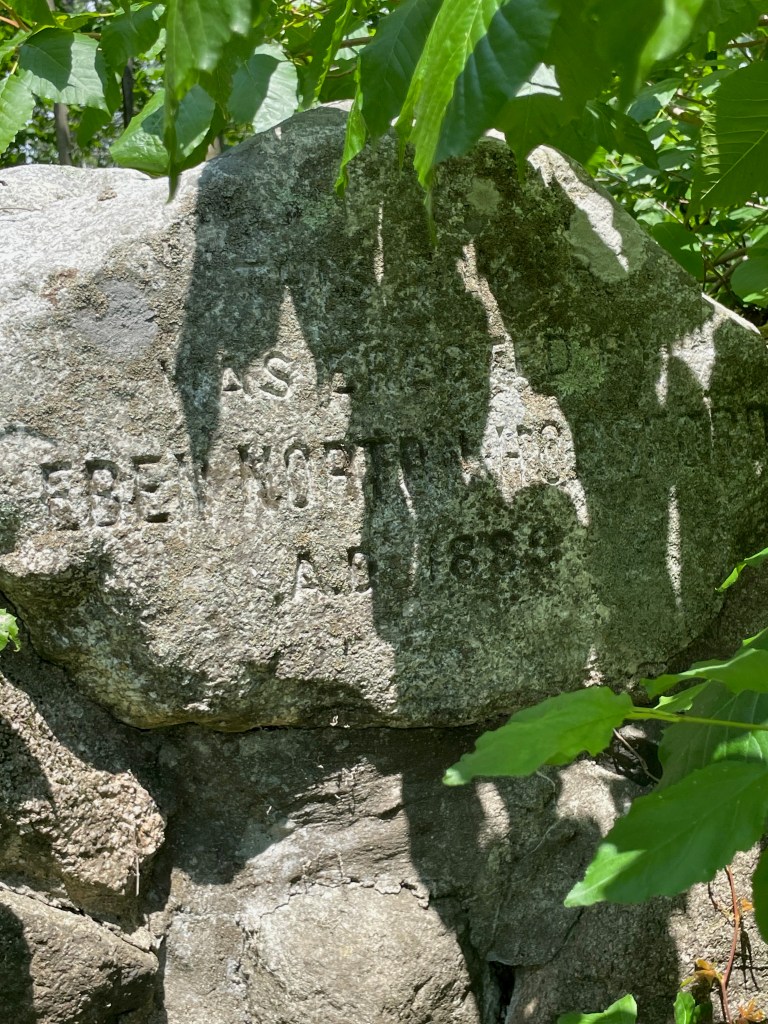
As we got closer, I noticed an inscribed rock on top of a stonewall that said “This tower was erected by Eben Horsford A.D. 1889. I was not sure who inscribed the rock and stood there and thought about that. While I was pondering this random rock, Colleen yelled over that the gate to the tower was open and she had never seen that before.
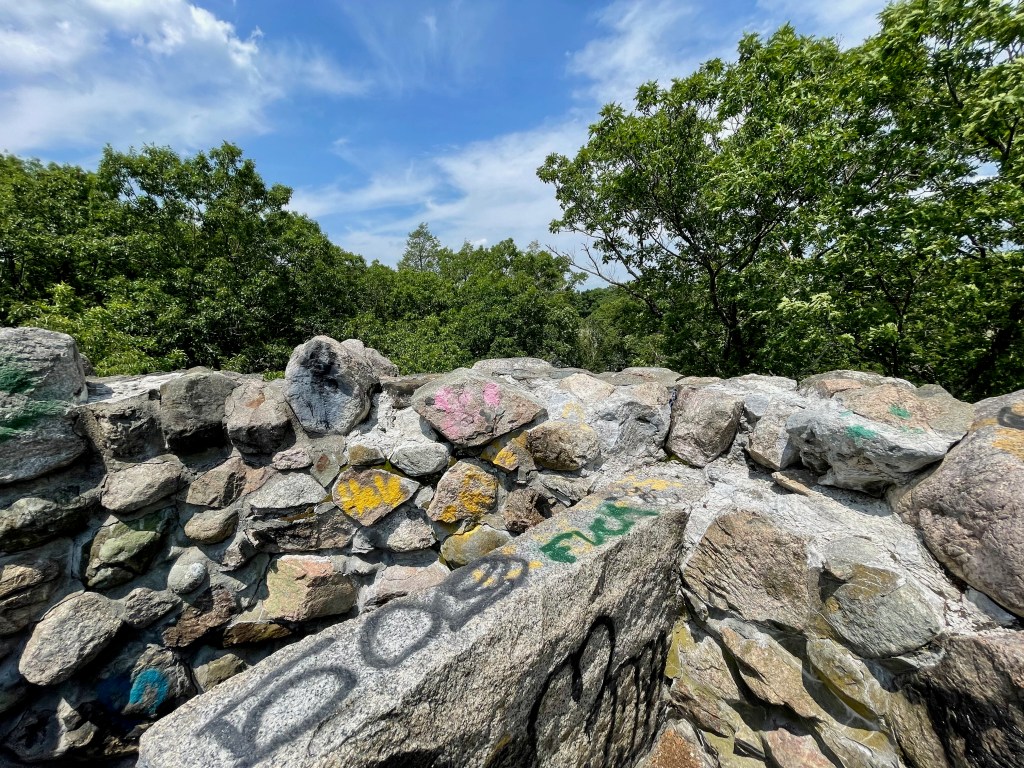
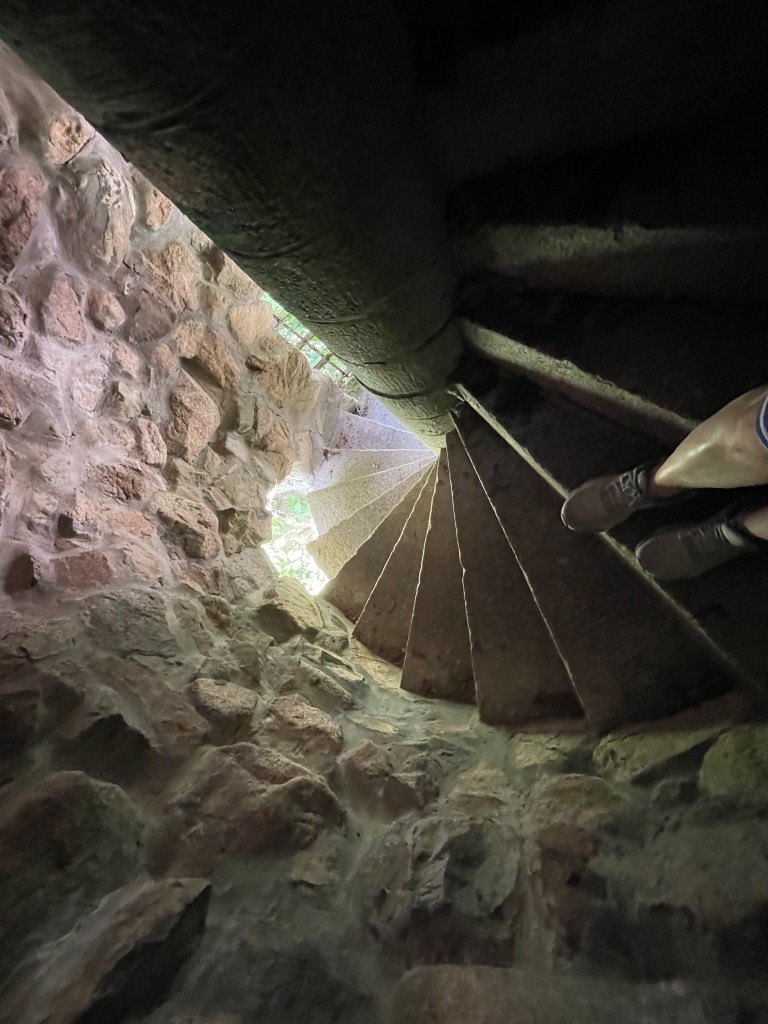
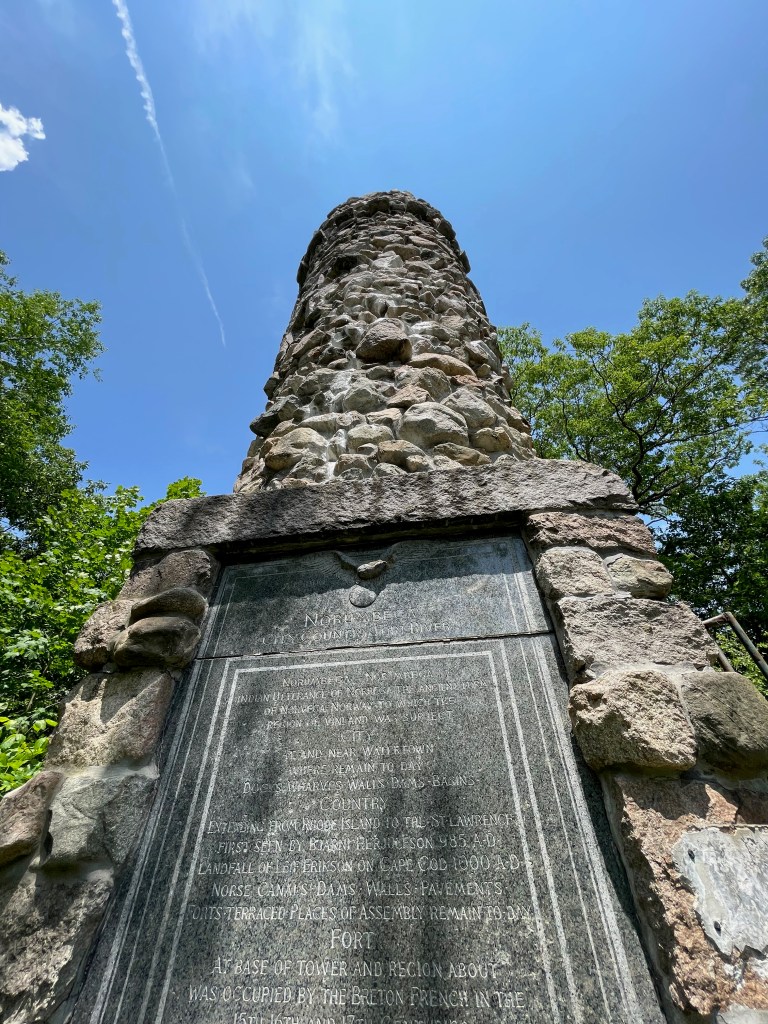
Upon coming to that open gate, I first noticed some bright pink graffiti, iron bars on a window facing out towards the woods and a winding, steep stone staircase. Colleen was quickly on those stairs with me following her. It quickly became cooler, darker, and steeper as we navigated our way up the 60 plus stairs. There were points that I was kind of on my hands and knees going up these steep somewhat crumbly stone stairs. I had on sunglasses and it was hard to see in the dark. Finally, I could see sunlight again and was glad to see Colleen. Again, I burst out laughing at the fact that someone, who had money but no facts, could build such a thing that was still around 130 plus years later. I wondered how I could use this monument as a lesson about how monuments get built, who decides who gets a monument as well as how do you decide if something is credible? Unfortunately, we could not really see the Charles River as the trees obstructed our view. After spending a little time there, it was now time to traverse our way back down the steep, dark steps. When I got down, I read the plaque on the front of the tower that described the “history” of this land.
One of Horsford’s key “clues” that the Vikings were here lay in the name “Norumbega”. He thought that word was a derivative of the Norwegian name for Norway. However, the word Norumbega is derived from the Algonquian language and is thought to mean “quiet place between the rapids” or “quiet stretch of water.” On this quiet spot, it seems like indeed that is the perfect name for this geographic spot – a quiet spot along the Charles River rather than a fort to protect the fictional city of Norumbega. I can’t wait to hear the third graders response to this lesson!


Fake News – 1889 Style
 Waiting